

Design
CAD the robot in Onshape, argue the tradeoffs, and own the geometry that everything else depends on.
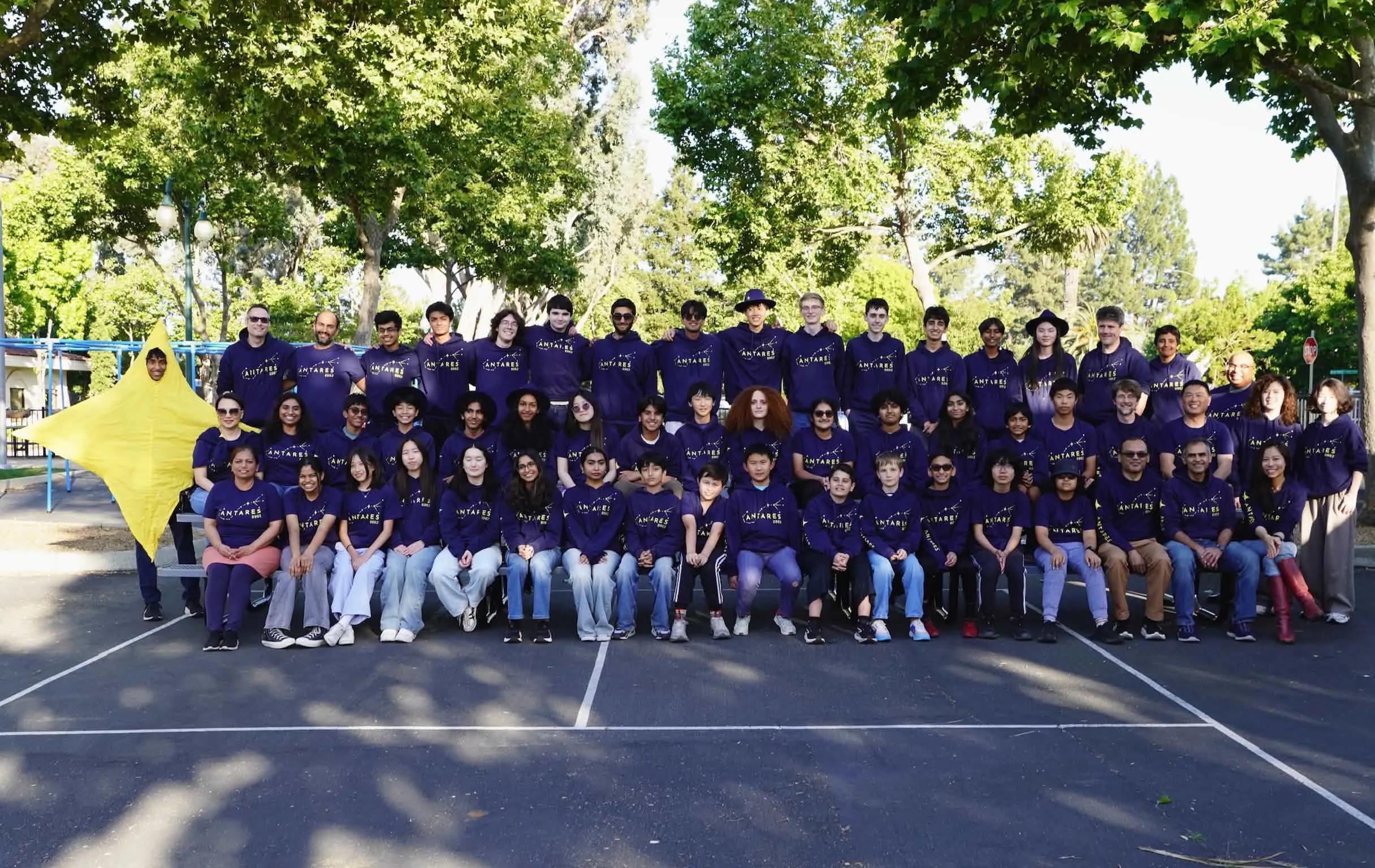
About Antares
Mentors bring safety, technical context and coaching. Students do the rest: they make the engineering calls, run the budget, find the sponsors, and teach the group coming up behind them.
Leadership development
FRC typically serves 9th through 12th grade. Because Antares starts in 6th grade, a student can spend seven years on the team: long enough to learn a discipline properly, lead it, and train a replacement before they leave.
6th graders start alongside experienced teammates instead of waiting for high school.
Structured training in design, build, electrical, code, fabrication, marketing, business and outreach.
Students own a subsystem, a budget line or an outreach program, with mentors as coaches.
Leads train the students behind them, so expertise stays on the team when they graduate.
What students lead
Every one of these has a student lead, a training curriculum and a job to do before the robot ships.
CAD the robot in Onshape, argue the tradeoffs, and own the geometry that everything else depends on.
Cut, drill, tap and assemble. Turn a model into a machine that survives a competition weekend.
Power distribution, motor controllers, sensors and the wiring discipline that keeps a robot alive.
Java on the roboRIO: autonomous routines, driver controls, vision and the control loops between them.
CAM in Fusion 360 and the Shopbot CNC router that cuts our custom parts.
Social media, merchandise, photography and the team's public voice.
Budgeting, sponsor research, pitching and the partnerships that fund the season.
Events that bring robotics to younger students and the wider community.
Our school
Antares is based at Khan Lab School, a nonprofit school built to explore what mastery-based, student-directed learning looks like in practice. The team extends that model into a leadership development and engineering program with real deadlines, public performance and student ownership.
Sal Khan began tutoring his cousin remotely, which grew into Khan Academy, the nonprofit known for free online lessons and mastery learning.
His book The One World Schoolhouse proposed a student-centered, mastery-based model for K-12 education.
He founded Khan Lab School in Mountain View to test and refine those ideas in an actual school.
KLS serves approximately 315 TK-12 students on two Silicon Valley campuses, with an emphasis on student agency and real-world application.
The competition
Every January, FIRST reveals a brand-new game. Teams get 8 weeks to build a robot for it, then compete at district events and regionals. Matches last two and a half minutes and pair alliances of three teams against three.
For the first 15 seconds the robot runs student-written code with no driver input.
Students take the controls, maneuver the field and coordinate with two alliance partners.
Robots score points on that season's tasks and race for an endgame position. The higher alliance score wins.
More than 93,000 students competed in FRC in 2025, and over 200 Fortune 500 companies sponsor FIRST. Read more about the program.
Recognition
Antares awards span technical performance, imagery, team culture and individual student leadership.
Get involved
Sponsorship and donations pay for the parts, the registration fees and the shop time that make this program possible.